
Evidence & compliance
Insurance Claim Documentation: Building an Evidence Trail That Holds
Claim files are read by people looking for gaps. Photograph coverage, causation language, and scope documentation are where adjusters most often create work for themselves.
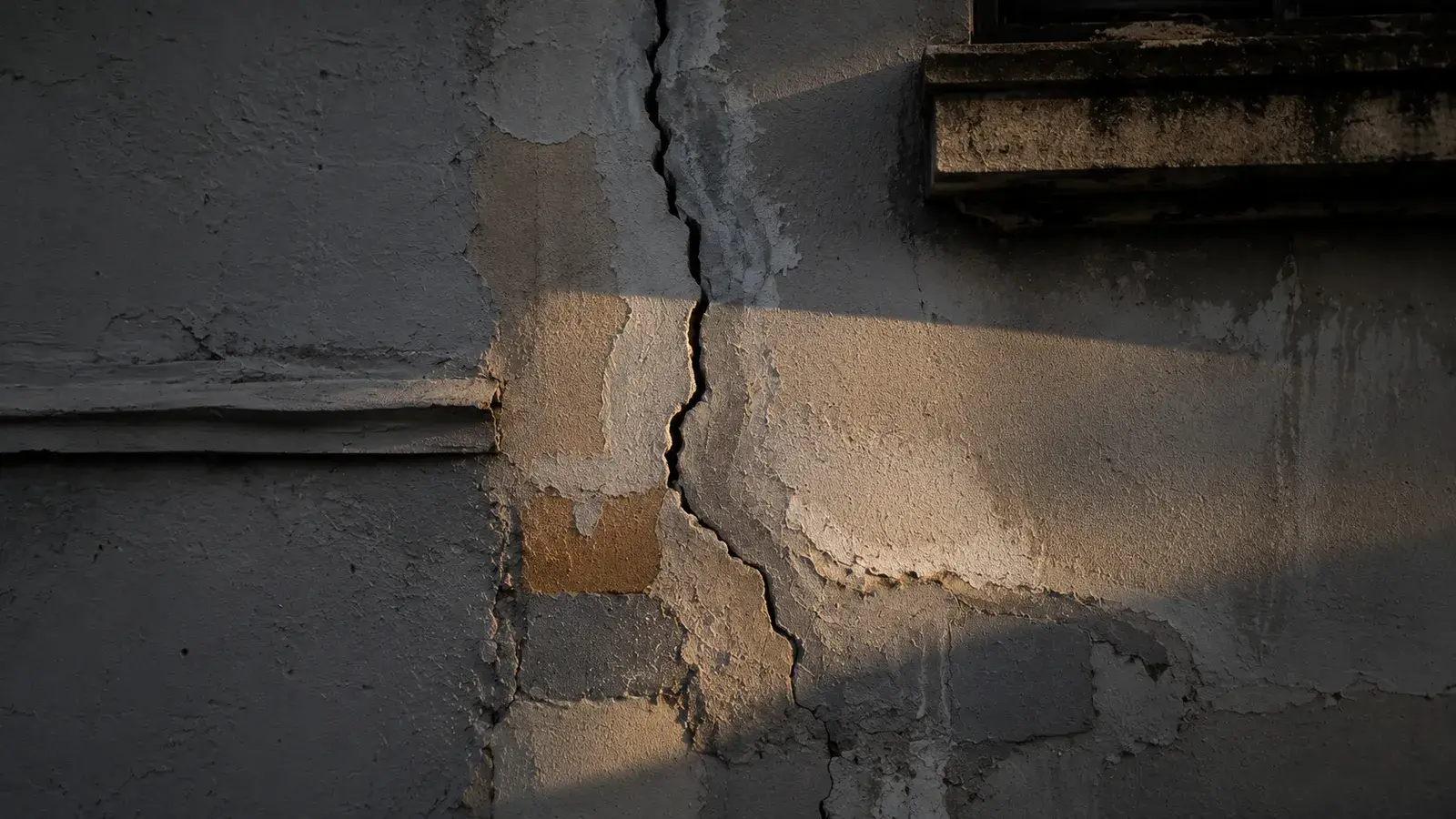
A claim file is read differently from an inspection report. It is examined by a desk adjuster, sometimes by a supervisor, occasionally by opposing counsel or a public adjuster whose job is to find what is missing. Documentation that would be adequate for an advisory report is frequently inadequate here.
The recurring weaknesses are consistent: incomplete photograph coverage, causation stated more strongly than the evidence supports, and scope items that appear in the estimate without corresponding evidence in the file.
Photograph coverage: the completeness problem
The most common file deficiency is not photograph quality. It is coverage — missing frames that make it impossible for a reviewer to place damage in context or to rule out alternative explanations.
A defensible coverage set generally establishes four things, in this order:
- Identity. The property is the insured property — street number, address verification, an overview establishing the structure.
- Context. Each elevation and each affected area photographed as a whole before any detail work, so a reviewer can orient themselves.
- Condition. The damage itself, at a distance that shows extent and close enough to show character.
- Absence. Undamaged areas photographed deliberately. Documenting what is not damaged is what makes the damaged areas credible.
Causation language is where files get challenged
Adjusters are asked to determine what caused a loss. That determination drives coverage, which is why causation language attracts more scrutiny than any other part of the file.
The distinction to maintain is between what was observed and what is concluded. "Impact marks consistent with hail were observed on the north slope" is an observation supported by photographs. "The roof was damaged by the storm of 14 March" is a conclusion that requires supporting reasoning, dates, and often meteorological data.
| Weak formulation | Stronger formulation | Why |
|---|---|---|
| Damage caused by hail | Impact damage consistent with hail observed on north and west slopes | States the observation and the inference separately |
| Roof is old and worn out | Granule loss and mat exposure consistent with age-related weathering observed across all slopes | Descriptive rather than conclusory; supports an exclusion without asserting it |
| No pre-existing damage | No indications of prior repair or pre-existing deterioration were observed in the affected area | Records what was looked for, not an absolute claim |
| Extensive interior water damage | Water staining observed on ceiling in three rooms; extent documented in photographs 12–19 | Quantified and tied to evidence |
The pattern is consistent: describe first, conclude separately, and make it clear which is which.
Scope documentation: every line needs evidence
A scope of loss is a series of assertions about what needs repairing and how much of it there is. Each assertion should be traceable to something in the file — a measurement, a photograph, a diagram.
Scope items that appear without supporting evidence are the ones that generate supplement requests, re-inspections, and disputes. Documenting the measurement at the time of inspection is dramatically cheaper than defending it three weeks later.
- Record measurements at the point of measurement, not from memory afterwards
- Photograph the measurement being taken where the dimension is contested or unusual
- Note the basis for any quantity that was derived rather than measured
- Where condition affects depreciation, document the condition indicators specifically
Timestamps and sequence in catastrophe work
Catastrophe deployment compresses everything: many properties, long days, poor connectivity, and files assembled late. It is exactly the environment where documentation quality degrades and where it matters most, because CAT files attract disproportionate review.
The technical point worth insisting on is timestamp integrity. If a system overwrites the time a photograph was captured with the time it eventually uploaded, an entire day of inspections appears to have occurred simultaneously in the evening. In a file where sequence may be contested, that is a self-inflicted problem.
Consistency across a deployment
When several adjusters work the same event, files should be recognisably consistent. Variation in structure, terminology, and photograph conventions makes comparison harder and gives a reviewer reason to question the process rather than the finding.
Consistency comes from shared standards rather than individual discipline: the same coverage requirements, the same terminology for common conditions, the same file structure. Where language is drawn from a common reviewed source rather than composed independently by each adjuster, this happens by default instead of by supervision.
The reporting workflow behind good files
Documentation quality is mostly determined on site. Photographs matched to the area they document, measurements recorded where they were taken, and observations captured while the property is in front of you produce a file that assembles quickly and holds together.
Files reconstructed afterwards from an unsorted camera roll are where coverage gaps, misattributed photographs, and over-stated causation enter — not through carelessness, but because memory is being asked to do work that documentation should have done.
A defensible workflow should therefore be tested as part of the inspection report software selection process, not assessed from the finished PDF alone.
Frequently asked questions
How many photos should a property claim inspection include?
There is no fixed number, and counting is the wrong measure. Coverage is what matters: identity of the property, context for each affected area, the damage itself at multiple distances, and deliberate documentation of undamaged areas. A reviewer should be able to orient themselves without having been there.
How should adjusters word causation in a claim report?
Separate observation from conclusion. Describe what was observed factually, then state the determination and the reasoning that supports it. Language that asserts a cause without establishing it is the most frequently challenged part of a claim file.
Why does photo timestamp integrity matter in claims?
Sequence can be contested. If a system replaces the capture time with the upload time, a full day of inspections appears to have happened at once, in the evening — which invites questions that are entirely avoidable.
What causes supplement requests?
Frequently, scope items that lack supporting evidence in the file. Every line in a scope of loss is an assertion; the ones without a measurement, photograph, or diagram behind them are the ones that get queried.
How do you keep documentation consistent across a CAT deployment?
Through shared standards rather than individual discipline: common coverage requirements, common terminology for recurring conditions, and a common file structure. Language drawn from a shared reviewed source stays consistent without supervision.